
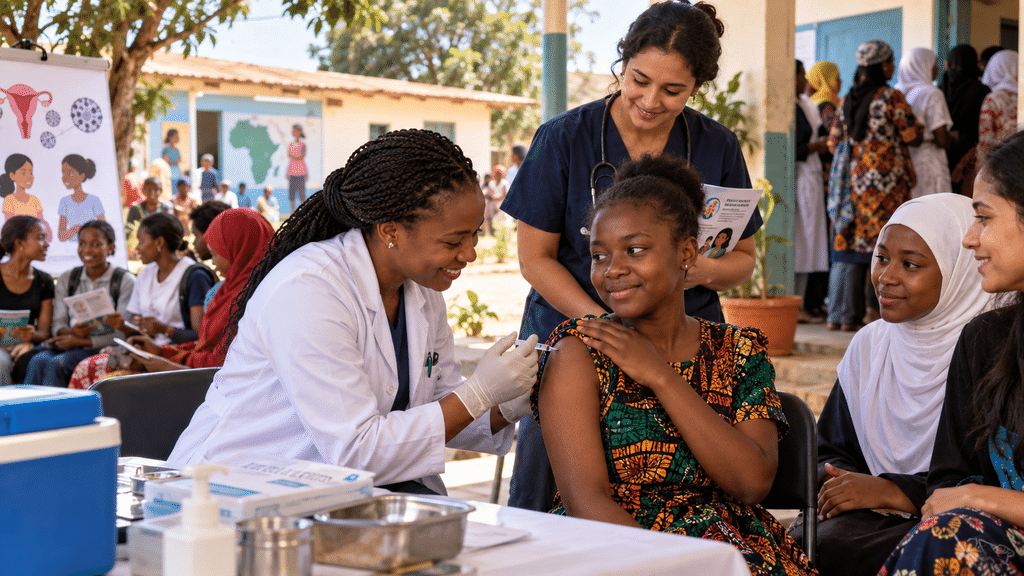
A screening programme can put a test within reach and still fail to create informed participation. Cervical-cancer prevention depends partly on infrastructure and clinical capacity, but it also depends on whether women understand what HPV is, how it relates to cervical cancer, what a positive result means and why follow-up matters.
This is a difficult communication problem because HPV is common, often asymptomatic, sexually transmitted and strongly associated with cancer. Those facts can create anxiety, stigma or false reassurance if they are poorly explained. Communication therefore has to separate infection from cancer, explain risk without creating panic, and make the next step after testing understandable.
Risk-communication work in Tanzania used verbal explanation, video and animation alongside self-sampling. The deeper lesson is not that one medium is universally superior. Visual explanation, short video and conversation can make unfamiliar procedures easier to grasp, but they should be judged by comprehension, confidence, appropriate screening decisions and follow-up - not simply by whether a message was delivered. Communication is part of the clinical pathway because misunderstanding can become a form of loss to follow-up.
Publications behind this Insight
Risk Communication, HPV Knowledge and Self-Sampling Among Women in Tanzania
Risk Communication, HPV Knowledge and Self-Sampling Among Women in Tanzania. 2025. 10.24908/iqurcp18918.
Open publicationA Health-Systems Appraisal of Cervical-Cancer Prevention Services in Tanzania
Melinda Chelva, Sanchit Kaushal, Nicola West, Erica Erwin, Safina Yuma, Jessica Sleeth, Khadija I. Yahya-Malima, Donna Shelley, Isabelle Risso-Gill, Karen Yeates. “In the Village That She Comes from, Most of the People Don’t Know Anything about Cervical Cancer”: A Health Systems Appraisal of Cervical Cancer Prevention Services in Tanzania. International Journal of Environmental Research and Public Health. 2024. DOI 10.3390/ijerph21081059.
Open publicationBeyond the Screening Test: Building Cervical Cancer Prevention with Indigenous Communities
Nicola West, Sara Medina Kasani, Elaine Innes, Khadyn Butterfly, Sandra Kioke, Erica Groenewoud, Enza Ferrara, Karen Yeates. Moving towards equitable cervical cancer screening for indigenous peoples. Open Access Government. 2026. DOI 10.56367/OAG-052-12536.
Open publicationSmarter Diagnostics, Wider Access: Bringing Cervical Cancer Prevention Within Reach
Meara Sanjayan, Nicola West, Christine Ha, Federica Inturrisi, Silvia de Sanjosé, Davis Amani, Jackline Ngowi, Pacifique Ndishimye, Karen Yeates. AI and molecular diagnostics: A revolution for cervical cancer equity. Open Access Government. 2026. https://www.openaccessgovernment.org/ebook/ai-and-molecular-diagnostics-a-revolution-for-cervical-cancer-equity/214436/.
Open publicationEvidence behind this Insight
- 1. Sanjayan M. 2025. DOI 10.24908/iqurcp18918. Risk Communication, HPV Knowledge and Self-Sampling Among Women in Tanzania
- 2. Chelva M, et al. 2024. DOI 10.3390/ijerph21081059. A Health-Systems Appraisal of Cervical-Cancer Prevention Services in Tanzania
- 3. Nicola West, et al. Moving towards equitable cervical cancer screening for indigenous peoples. Open Access Government. 2026. DOI 10.56367/OAG-052-12536. Beyond the Screening Test: Building Cervical Cancer Prevention with Indigenous Communities
- 4. Meara Sanjayan, et al. AI and molecular diagnostics: A revolution for cervical cancer equity. Open Access Government. 2026. https://www.openaccessgovernment.org/ebook/ai-and-molecular-diagnostics-a-revolution-for-cervical-cancer-equity/214436/. Smarter Diagnostics, Wider Access: Bringing Cervical Cancer Prevention Within Reach