
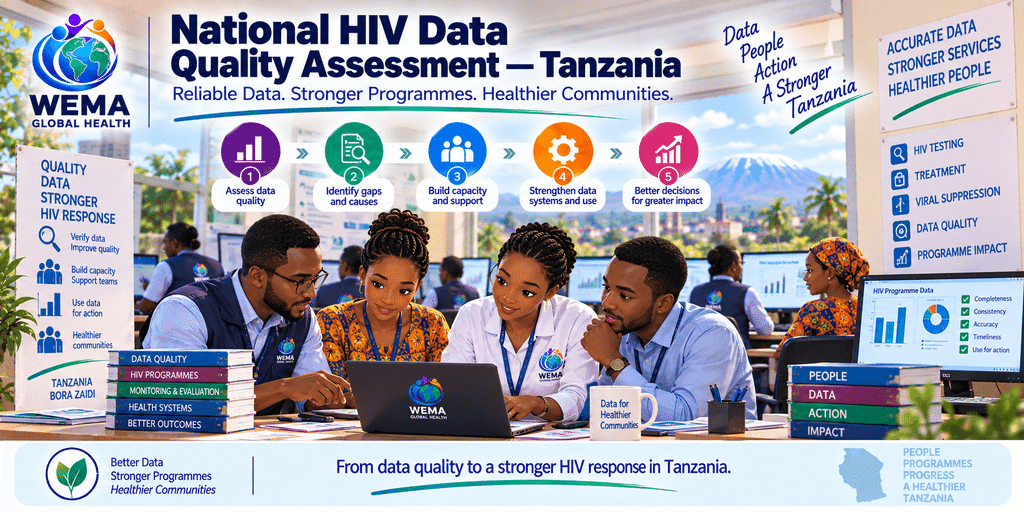
National HIV Data Quality Assessment - Tanzania
Routine HIV data are part of the care system. They show who is tested, who starts treatment, who remains engaged and whether viral-load monitoring is reaching the people who need it. When those data are accurate, complete and timely, facility teams and national programmes can plan with greater confidence. When inconsistencies enter the reporting chain, the effects can accumulate as information moves from source documents to facility summaries, district and regional systems and national decision-making.
Tanzania's National HIV Data Quality Assessment was designed as a system-strengthening exercise. It reviewed selected HIV testing, antiretroviral treatment and viral-load indicators and compared reported information with validated source records. The assessment also examined the monitoring-and-evaluation processes surrounding those numbers, including staffing, training, data-management practices, feedback and use of information.
Its scale gives the work particular value. The assessment covered all 26 mainland regions and 184 districts, with 502 hospitals, health centres and dispensaries sampled across levels of care. That creates a rare national view of how routine HIV information is produced, checked and used. The project treats verification not as an exercise in fault finding, but as a way to strengthen confidence in programme learning. Its central proposition is that reliable data depend on people and processes as much as on reporting platforms. Improving one discrepancy matters; building a system that can detect, understand and prevent recurring discrepancies matters more.